
Staring at endless diet advice online gets exhausting fast. One creator tells you to cut carbs. Another says to skip breakfast entirely.
In my practice as a nutritionist, I see people burn out because they rely on guesswork. Weight loss comes down to basic energy balance.
Think of your body like a smartphone battery. If you charge it with more energy than you drain each day, the battery stays full. If you drain slightly more energy than you use, your body taps into stored battery reserves.
That is where learning how to use a calorie calculator to lose weight simplifies everything. Instead of guessing portions, a calculator gives you clear daily targets based on your unique metabolism.
Take Control Today: Stop guessing your daily portion sizes. Find your exact personal energy needs and calculate your weight loss calorie deficit in under 60 seconds using our free Calorie Calculator.
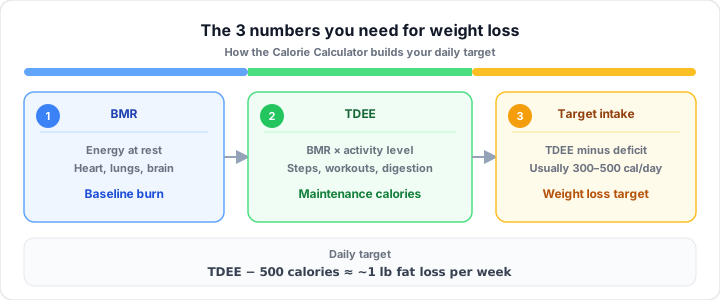
The 3 Numbers You Need to Know for Weight Loss
Before you hit calculate, let us break down the core metrics behind your output.
In my experience, understanding these three numbers makes the whole process feel natural rather than restrictive.
1. Basal Metabolic Rate (BMR)
Your BMR is the baseline energy your body burns just staying alive.
Even if you laid in bed all day doing nothing, your heart, lungs, and brain consume calories.
BMR = Baseline Energy Needed for Involuntary Body Functions
Estimate yours with our BMR Calculator.
2. Total Daily Energy Expenditure (TDEE)
Your TDEE builds directly on your BMR. It includes every step you walk, workout you complete, and even the energy spent digesting food.
TDEE = BMR × Activity Multiplier
This number represents your maintenance level. Eat exactly your TDEE, and your scale weight stays completely stable. Use the TDEE Calculator to find your maintenance calories.
3. Your Target Calorie Deficit
To lose body fat safely, you must create an energy deficit.
Subtracting 300 to 500 calories from your TDEE creates a steady weight loss calorie deficit guide target of roughly 0.5 to 1 pound per week.
Target Daily Intake = TDEE − 500 Calories
Safety Warning: Know Your Hard Limits
Extreme calorie restriction harms your long-term health. Slashing your intake slows your metabolism, causes muscle loss, and triggers intense hunger crashes.
In our testing with clients, eating too little always backfires. As a strict safety baseline:
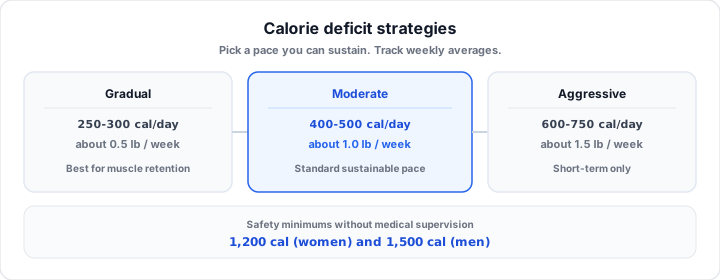
- Women should generally not drop below 1,200 calories per day.
- Men should generally not drop below 1,500 calories per day.
Dropping below these thresholds without direct medical supervision risks nutrient deficiencies, hormonal disruption, and chronic fatigue.
Step-by-Step: How to Apply Your Calculator Results
Moving onto the practical workflow, getting your numbers is only step one. Here is how you apply them in real life.
Step 1: Plug In Your Baseline Stats
Open your calculator and enter your age, height, biological sex, current weight, and realistic activity level.
Be honest about your movement habits. Selecting “highly active” when you work a desk job inflates your daily target. Start with the Calorie Calculator and cross-check body composition context with the BMI Calculator.
Step 2: Log Your Intake Honestly
Use a digital food diary app to track what you eat.
Weigh your food on a digital kitchen scale whenever possible. Measuring cups often lie, but gram weights give you total accuracy.
Step 3: Track Weekly Average Progress
Daily scale weight bounces up and down like a tennis ball. Water retention, stress, and salt intake cause temporary spikes.
Focus on your weekly average weight instead. Compare week one to week two to see your true direction.
| Goal Strategy | Daily Deficit Range | Target Weekly Weight Loss | Primary Focus Area |
|---|---|---|---|
| Gradual Loss | 250 – 300 Calories | 0.5 lbs / week | Maximum muscle retention & high daily energy |
| Moderate Loss | 400 – 500 Calories | 1.0 lbs / week | Standard sustainable fat loss pace |
| Aggressive Loss | 600 – 750 Calories | 1.5 lbs / week | Short-term target requiring close monitoring |
3 Common Pitfalls That Stall Weight Loss Results
Even with a great strategy, small tracking mistakes can sneak into your routine. Here are three common traps I watch out for in client food logs.
1. Forgetting Hidden Liquid Calories and Oils
Cooking oil is dense in energy. A single tablespoon of olive oil adds roughly 120 calories to your pan.
Coffee creamers, salad dressings, sauces, and cooking sprays add up fast. Measure your cooking oils instead of free-pouring.
2. Eating Back All Your Exercise Calories
Fitness watches frequently overestimate exercise energy burn.
If your watch says you burned 400 calories on a walk, eating 400 extra calories often wipes out your deficit. Treat exercise as a bonus for your heart health rather than extra food rewards. Estimate activity burn with the Calories Burned Calculator for a second opinion.
3. Rushing the Timeline
Sustainable fat loss takes time. Trying to lose ten pounds in two weeks leads to quick weight regain.
Focus on building habits you can stick with for six months, not six days. Consistency beats perfection every single time.
Launch Your Weight Loss Journey Today
Getting in shape does not mean eating bland food or starving yourself.
When you learn to calculate daily calories for weight loss with accuracy, you gain total control over your progress. You can enjoy your meals while watching the scale move steadily in the right direction.
Take the guesswork out of your nutrition plan right now.
Find your personalized daily calorie target with our free Calorie Calculator
Frequently Asked Questions About Calorie Calculators
- How often should I update my calorie calculator numbers?
- Update your numbers every 5 to 10 pounds of weight loss. As your body weight decreases, your baseline energy requirements decrease as well.
- Can I lose weight without exercising if I stay in a calorie deficit?
- Yes. Energy balance dictates weight loss. However, adding strength training protects your lean muscle mass so you burn mostly body fat.
- Why is the scale not moving even though I hit my target?
- Water retention, muscle repair, or uncounted food portions usually cause temporary stalls. Stick to your targets for two full weeks before adjusting your numbers.
- Is a calorie calculator accurate for everyone?
- Calculators provide an educated baseline estimate. Use your initial output for two weeks, observe your real-world progress on the scale, and fine-tune your intake accordingly.