
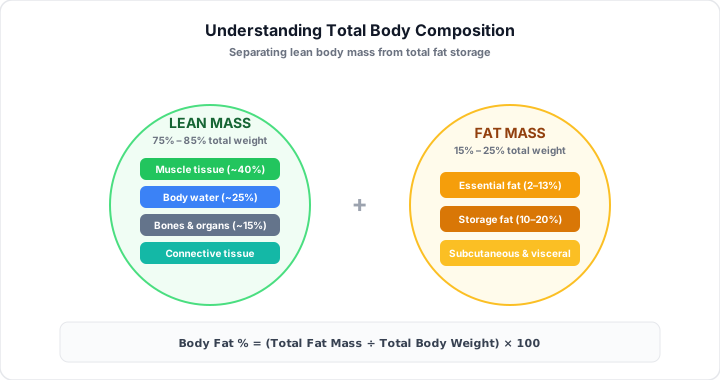
Scale weight rarely tells the whole story. A standard bathroom scale weighs everything together. It measures your bones, muscle tissue, body water, internal organs, and fat mass as one single number.
Body fat percentage isolates actual fat mass from your total body weight. This specific metric provides a far clearer picture of physical health and body composition changes than a basic scale ever can. In my coaching practice, clients routinely lose several pounds of pure fat while adding dense muscle tissue, leaving their overall scale weight unchanged despite significant physical transformations.
Think of your body like a high-performance vehicle. Your lean mass acts as the heavy engine block, frame, and mechanical components. Your fat mass serves as stored fuel in the gas tank. You need a baseline reserve of fuel to operate smoothly, but carrying extra heavy fuel tanks slows down performance and stresses the engine.
Essential body fat protects vital organs, insulates nervous system pathways, and regulates hormone production. Dropping below essential fat thresholds—roughly 2% to 5% for men and 10% to 13% for women—creates serious biological risks. It triggers chronic fatigue, severe hormonal disruptions, decreased bone density, and weakened immune defense.
Instant Measurement Tool: Skip manual math equations and confusing tape formulas. Use our Body Fat Calculator to check your personal metrics in under 30 seconds.
The Most Popular Body Fat Calculation Methods
To get started, let us evaluate the three primary measurement techniques used in home tracking and fitness testing facilities.
1. The US Navy Method (Tape Measure)
The US Navy calculation estimates body fat percentage using simple body circumference measurements. It requires only a flexible, non-stretch fabric measuring tape. Our Body Fat Calculator runs this formula automatically from your inputs.
For men, take circumference readings around your neck and waist at navel level. For women, record neck circumference, narrowest waist circumference, and widest hip point.
The underlying calculation uses logarithmic equations based on estimated body density:
- Men Formula: Body Fat % = 86.010 × log10(abdomen − neck) − 70.041 × log10(height) + 36.76 (inches)
- Women Formula: Body Fat % = 163.205 × log10(waist + hip − neck) − 97.684 × log10(height) − 78.387 (inches)
Follow these exact measurement steps to maintain accuracy:
- Neck: Measure horizontally directly below the larynx (Adam’s apple). Keep the tape flat against the skin without pulling tight.
- Waist: Wrap the tape horizontally across your navel for men, or at the narrowest waist point for women. Record the number at the end of a normal exhalation.
- Hips (Women only): Measure around the widest portion of the hips and glutes, keeping the tape parallel to the floor.
Military personnel can also check compliance with the Army Body Fat Calculator, which applies AR 600-9 tape test standards.
2. Skinfold Calipers (Pinch Method)
Skinfold calipers measure the thickness of subcutaneous fat resting directly beneath your skin layer. Testers pinch specific anatomical landmark sites following standard 3-site or 7-site Jackson-Pollock testing protocols.
Common measurement locations include the triceps, chest, suprailiac (above hip bone), abdomen, and thigh. You sum up the millimeter readings and plug them into age-adjusted body density tables. Caliper accuracy relies heavily on physical technique and operator experience.
3. Bioelectrical Impedance Analysis (Smart Scales)
Smart scales send a safe, low-level electrical current up through your feet and legs. Water and lean muscle tissue conduct electricity rapidly. Subcutaneous fat tissue resists electrical signals because it stores minimal fluid.
The device measures this electrical resistance (impedance) to estimate total body composition. While quick, smart scale readings fluctuate based on daily hydration, recent exercise, and meal timing.
| Method | Accuracy Level | Equipment Needed | Main Advantage | Potential Drawback |
|---|---|---|---|---|
| US Navy Method | High (±3–4%) | Flexible Tape Measure | Low cost, easily repeatable anywhere | Ignores localized muscle distribution |
| Skinfold Calipers | Moderate (±3–5%) | Skinfold Caliper Tool | Directly measures physical subcutaneous fat | Requires consistent tester technique |
| Smart Scale (BIA) | Variable (±5–8%) | Digital BIA Scale | Instant, effortless automated reading | Hydration shifts skew daily numbers |
Healthy Body Fat Categories Chart
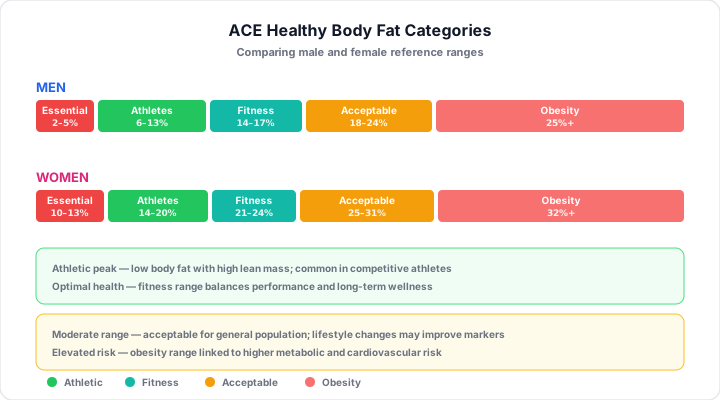
Moving onto target benchmarks, healthy reference numbers differ between biological sexes due to reproductive biology and hormonal structure. Women naturally carry greater essential fat reserves to support endocrine function and pregnancy.
The American Council on Exercise (ACE) establishes the following standard categories:
| Category | Men Body Fat Range | Women Body Fat Range |
|---|---|---|
| Essential Fat | 2% – 5% | 10% – 13% |
| Athletes | 6% – 13% | 14% – 20% |
| Fitness | 14% – 17% | 21% – 24% |
| Acceptable | 18% – 24% | 25% – 31% |
| Obesity | 25%+ | 32%+ |
Common Mistakes When Tracking Body Fat
In practical environments, measurement errors frequently lead to false plateaus and unnecessary stress. Watch out for these three primary tracking pitfalls:
- Testing at Unstandardized Times: Body water content shifts dramatically between morning and evening. Waist circumferences naturally expand after meals. Always measure first thing in the morning right after using the restroom.
- Overlooking Water Hydration Spikes: Salty dinners, strenuous weightlifting workouts, and elevated stress levels cause temporary fluid retention. Extra water weight distorts smart scale electrical impedance outputs. Keep your hydration habits steady prior to testing.
- Reacting to Daily Noise: True body composition alterations take weeks to register. Track multi-week rolling averages instead of overanalyzing single-day scale or caliper shifts.
When you keep testing conditions strict and consistent, you can reliably estimate your lean body mass ratio and refine your nutritional intake with the Calorie Calculator or TDEE Calculator.
Frequently Asked Questions About Body Fat Calculation
- How often should I measure my body fat percentage?
- Test your body fat once every two to four weeks. Realistic fat reduction occurs at approximately 0.5% to 1% of body weight per week. Checking daily measures water noise rather than true structural progress.
- Why do women require higher essential body fat than men?
- Women require higher baseline fat reserves to maintain reproductive tissue, support estrogen synthesis, and regulate metabolic health. Essential fat cushions internal organs and sustains normal endocrine cycles.
- What is the most reliable way to measure body fat at home?
- The US Navy tape measure protocol offers the best combination of low cost, ease, and repeatability at home. Tape measurements avoid water balance swings that compromise digital smart scales.
- Is BMI the same as body fat percentage?
- No. Body Mass Index (BMI) evaluates basic height-to-weight ratios. BMI cannot distinguish lean muscle mass from fat mass, often misclassifying muscular lifters as overweight. Compare both metrics with our BMI Calculator and BMI guide.
Start Tracking Your Progress with Confidence
Consistency in your chosen measurement technique matters far more than mathematical perfection. Select one reliable method, maintain standardized morning testing conditions, and focus on long-term multi-week trends.
Ready to check your personal starting baseline right now? Access our free Body Fat Calculator to analyze your metrics instantly!